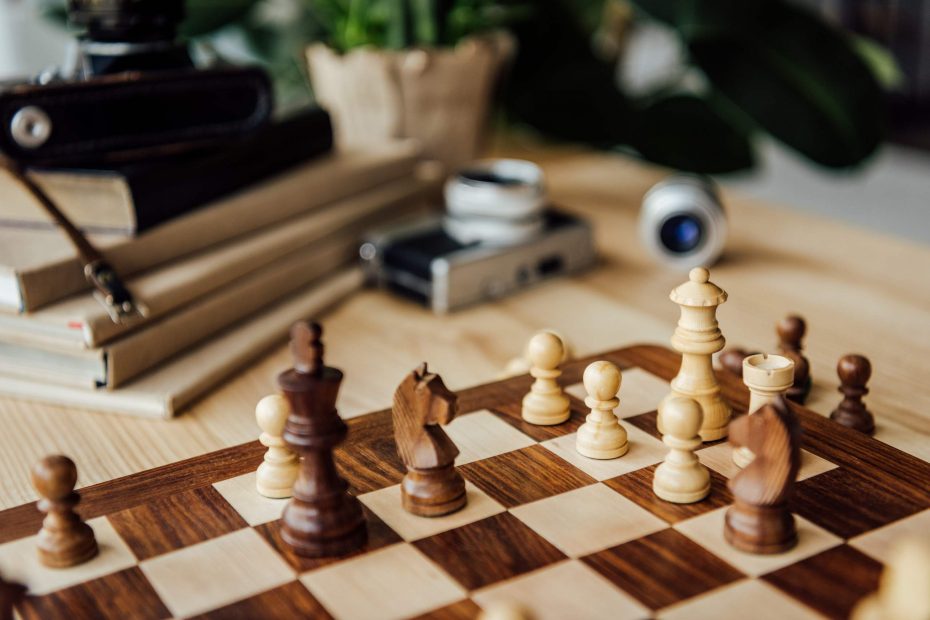
The gap between beginner and strong chess players isn’t simply how much they know, but rather how they think.
For the majority of players, moves are reactive. See a threat, respond to it; see a threat, capitalize on it. The game will appear messy, and often a player’s decision-making is instinctual. But when the playability of your position improves, the nature of your chess improves with it.
The strong do not see the move alone but the position itself.
They don’t look for “How can I win with this move?”, instead they look for “What do I want to do here?” “Which of my pieces can move into a strong spot?” and “What are the weaknesses?”. And that changes everything.
The strong evaluate the position, and know why one side is better even when there is no tactic in sight, or which side to choose. The strong see whether your king’s safety, piece activity, space control or something else matters, and they do not have to calculate a thousand moves deep in order to see it.
The strong have a plan, instead of a single move. The strong understand that a plan does not only end with a single move, but rather with one’s move towards a direction; maybe a plan is to control the center, attack a weak pawn, or just to improve a single piece.
The strong don’t move pieces randomly, they make their pieces cooperate with each other. A rook helping you to push a pawn, a knight that controls important squares, or a bishop that puts pressure on the long diagonal.
The strong understand when it’s the right time to make your move. If you have to wait, they don’t play yet, and instead just wait, maybe just prepare, maybe improving the position of their pieces.
And yes, calculation. But they don’t calculate everything, because it would be impossible. In a sharp or unclear position, they calculate, in order to compare options, to visualize outcomes, and to make the right choice.
The strong know how to deal with complicated positions. They are in their element when you’re in trouble, they don’t get panicky. They understand it can be complex, but they know that they can understand it, and that they can stay focused even when things go wrong. It’s not a talent, it’s experience.
ChessMindFlow was designed to do exactly this.
ChessMindFlow doesn’t teach you how to play better, it teaches you how to think better. In a step by step fashion, you learn how to evaluate a position, how to build plans, and how to make the right moves.
When you start thinking like a strong player, you stop playing random moves, and start playing with an intention. That’s when the real work starts