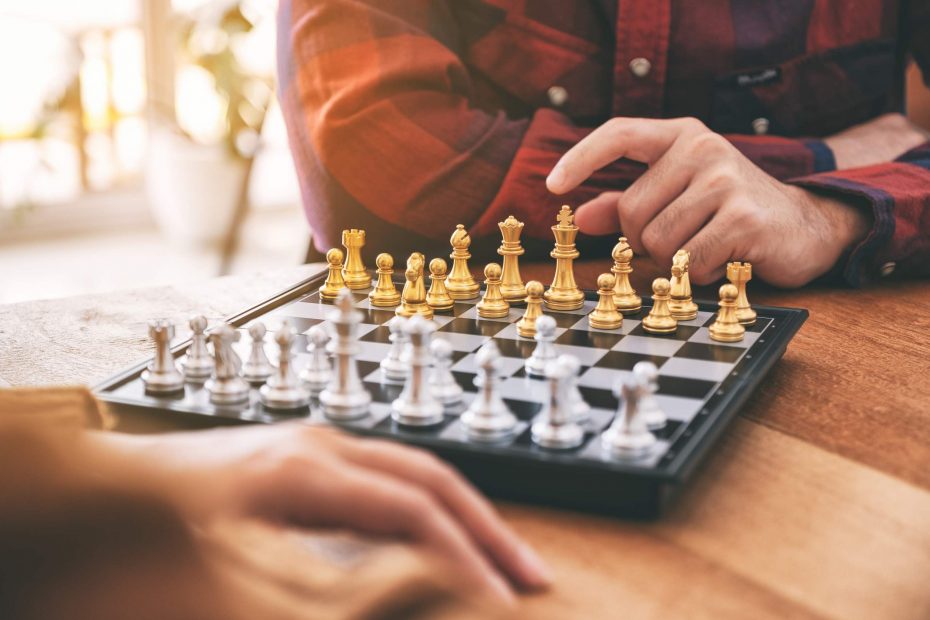
Chess is deceptively simple: a board, a set of pieces, some rules. But when you start to take the game seriously, the reality is anything but. Suddenly, a simple game has transformed into a mental battlefield that demands your attention.
Chess is a game where the only thing standing between a win or a loss is you. There is no cheating, luck, or luck of the draw, it’s just you. Your thinking skills, and your ability to be in the moment. Everything you think or feel during a game will determine the outcome. It’s no wonder then, why chess is a great tool for developing brain functions!
Pattern recognition is key. In the beginning, it’s easy to lose a game or be confused by what’s happening on the board. You don’t understand your opponent’s idea or you have no clue what your next move should be. As you get more experienced, your brain is able to start connecting dots. You will be able to instantly recognize patterns, see common mistakes and spotting the right move. This is an incredible gift!
Another thing chess develops is thinking ahead. This game constantly forces you to anticipate future moves. The game isn’t about just making a good move but thinking about the implications of your move. The best players aren’t simply reacting to situations, they’re actively planning and executing strategies. In life, planning and having a system to execute is key for success.
A lack of focus is often the reason why people fail to develop a skill. We live in a world of distractions and there is no time left for focus. This is something chess forces players to master. Making bad move during a game often leads to a losing game, therefore chess encourages deep thinking and mindfulness, which are skills that are valuable everywhere, work, school, or personal life.
The most underrated skill that is developed throughout learning and playing chess is patience. Improvement takes time. Chess can be a rough game when you play too many games and make too many mistakes. In the end, your mistakes will teach you lessons and losses will lead you to victory. The resilience and discipline needed to succeed in chess will be an asset far beyond the game.
One more important point to remember: playing chess doesn’t make you better at chess. The key to improvement is in structured learning. You are able to continue making the same mistakes unless you take the time to understand concepts and practice them, which allows you to become better. When you learn with a system in place, the process becomes clearer.
Here at ChessMindFlow, we believe that you don’t need to play more games to become a better chess player. You need to understand more! Through learning, practice, and review of your games you will gain knowledge that can only help you in the long-term.
Because, at the end of the day, chess isn’t just a competition.
It’s a method for training your mind, for teaching you to think, to plan, and to adapt.
And when it becomes a part of your life it doesn’t stay in the game.